
Five Things to Consider Before Getting Hair Extensions
Hair extensions can give you the length and fullness you’ve always wanted — but before you head into a salon, there are a few important things to think through. We’ve put together this guide to help you make the right decision.
Hair Quality
Length & Volume
Lifestyle
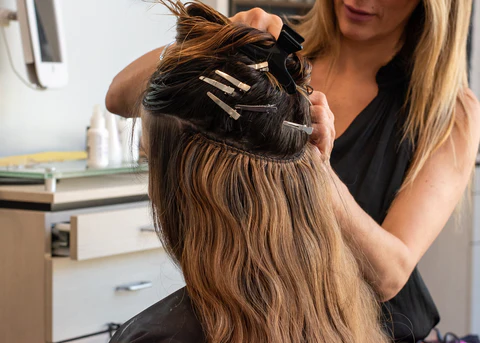
#1 — What Type of Extensions Do You Want?
When deciding which extension method is best for you, consider how much you want to spend, how much time you’re willing to spend applying and maintaining them, and whether you want a temporary option you can take in and out daily or a more permanent solution.
Our professional opinion: the short-term benefits of extensions are greatly outweighed by the long-term damage most methods cause. The Glamour Locks Hair Extension System is the only patented and guaranteed non-damaging method available.
#2 — What Type of Hair Is Best for You?
After deciding on a method, the next consideration is the quality of the hair itself. Not all extension hair is created equal — and the difference matters significantly for longevity, appearance, and hair health.
Why Remy Hair Falls Short
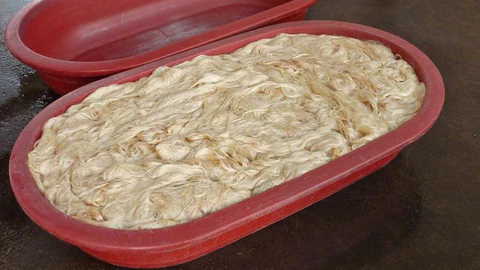
The most common hair at salons across the country is Remy Hair. While marketed as premium, it’s the most widely used hair for one reason: it’s cheap. Remy Hair is imported from Asian countries with no regulations governing sourcing. A related category called Standard Hair is gathered from numerous sources — including salon floors — bundled together, silicone-coated, and packaged for sale.
Since most Asian hair is naturally darker, blonde or lighter-toned Remy extensions have been bleached and chemically processed to achieve that color — resulting in severely damaged, dry hair. Synthetic extensions (made from plastic) are even less suitable: they can’t be styled with hot tools, don’t feel natural, and are easy to detect.
What to Look for in High-Quality Hair
No silicone coating — the hair’s natural cuticle stays intact for lasting softness and shine.
All hair from one source ensures consistent texture, color, and cuticle direction.
Premium hair lasts up to one year with proper care.
Transparent sourcing with verified origin — not gathered from salon floors or unregulated suppliers.
Uni-directional and cuticle-intact hair prevents tangling and frizz.
No synthetic blends — only real human hair that can be styled, colored, and treated like your own.
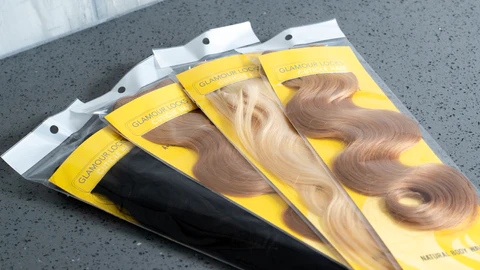
Glamour Locks Cuticle Hair Wefts meet every one of these standards and represent the highest quality extension hair available.
#3 — How Long Do You Want Your Hair to Be?
Do you want length, volume, or both? This will determine how much hair you need and will ultimately affect pricing. We offer hair in lengths from 16 inches (just past your shoulders) up to 24 inches (past your waist). Most clients purchase between 4 and 6 ounces of hair for their desired volume.
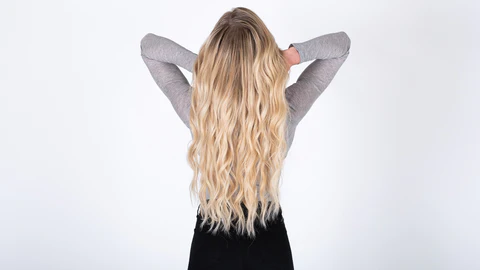
This is also a great time to decide if you’d like to change your color. The price of your extensions will depend on your starting length, your desired length, and the volume you’re adding. You can read more about our pricing here.
#4 — What Type of Lifestyle Do You Have?
Are you an athlete, do you work out often, surf, or stay constantly active? These are all important factors when choosing extensions. Depending on how frequently you’re washing your hair — after swimming or sweating — you’ll want to take preventative steps to keep the extension hair lasting as long as possible.

We recommend that active clients add a deep conditioning treatment to their maintenance service — you’ll already be coming in every 6–8 weeks for a retie, so it’s easy to add on. The Glamour Locks Hair Extension System is lightweight, durable, and built to handle workouts and even swimming, so your hair can keep looking great no matter what your day brings.
#5 — Are You Ready to Commit?
Like any service, maintaining your extensions will be necessary. As your natural hair grows, the extensions will loosen and hang lower — so retie appointments are required every 6–10 weeks depending on how fast your hair grows. Keeping up with these appointments ensures your extensions always look fresh and secure.
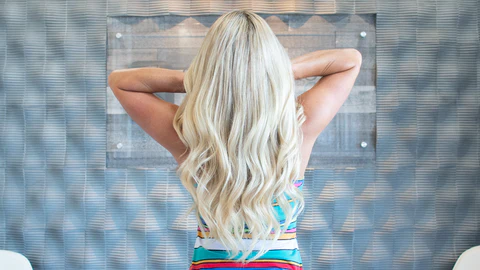
With so much to consider, getting extensions might feel daunting — but it doesn’t have to be. The two most important things to remember: choose a method that causes zero damage, and choose high-quality hair that lasts and looks natural. If you’re interested in the Glamour Locks Hair Extension System, request a free consultation below.
Ready to Get Started?
Visit one of our Orange County studios in Costa Mesa or Anaheim Hills, or request a free consultation to find the right system for your hair goals.
A Closer Look at Each Hair Extension Method
Not all hair extensions are created equal. Understanding how each method works — and what it costs your hair over time — is the most important research you can do before booking an appointment. Here’s an in-depth breakdown of every extension type you’ll encounter.
Tape-In Hair Extensions
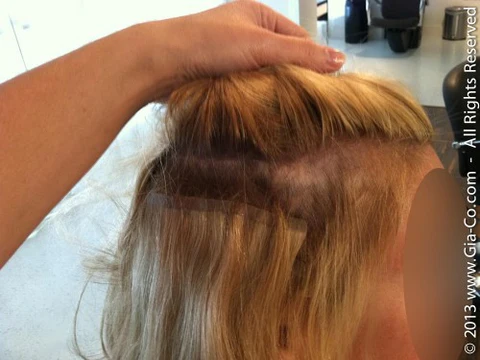
Tape-in hair extensions are one of the most widely recognized semi-permanent methods on the market. They work by sandwiching a thin weft of hair between two adhesive strips, which are then pressed flat on either side of a section of your natural hair — typically about one inch from the scalp. The process is relatively fast compared to other methods, with a full installation usually completed in under two hours. For clients who want a quick transformation without a lengthy salon visit, the speed of tape-ins is part of their appeal.
However, the adhesive used in tape-in extensions comes with a significant trade-off. Because the strips are bonded directly to your natural hair, heat — from blow dryers, flat irons, and even warm water — can break down the glue over time, causing slippage and uneven wear. More importantly, the flat adhesive strip creates a pressure point that concentrates the weight of the extension weft onto a narrow band of your natural hair. Over repeated application cycles, this can lead to tension-related breakage, particularly along the hairline and at the nape of the neck where hair is already finer.
Tape-ins also require more frequent maintenance than many clients expect. The bonds need to be moved up every six to eight weeks, and the tape itself must be replaced each time — adding to the ongoing cost of the method. Clients with oily scalps often find that their natural oils break down the adhesive faster, shortening the window between appointments. Stylists who apply tape-ins must also leave adequate spacing between strips to prevent matting, which can limit how much volume the method can realistically achieve. For clients seeking long-term hair health alongside their extensions, most professionals would recommend exploring non-adhesive alternatives. If you’ve previously worn tape-ins and noticed thinning or breakage, a consultation with a Glamour Locks stylist can assess your hair’s current condition and recommend a recovery plan before transitioning to a gentler method.
Clip-In Hair Extensions
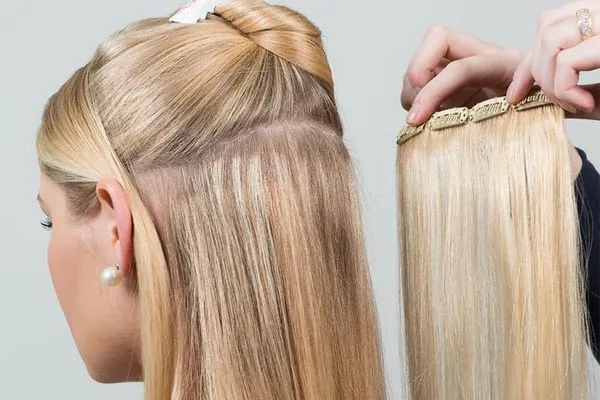
Clip-in hair extensions are the most accessible entry point into the world of hair extensions. They require no professional installation, no adhesive, and no heat — you simply snap the pressure-sensitive clips onto sections of your natural hair whenever you want more length or volume, and remove them before bed. For someone testing out extensions for the first time, or who needs occasional fullness for special events, clip-ins offer a low-commitment way to experiment with a new look without making a financial or physical commitment to a salon service.
The convenience of clip-ins is also their primary limitation. Because they’re designed to be taken in and out daily, they’re not engineered for continuous wear — and that daily on-and-off cycle introduces its own risks. The metal clips, when repeatedly opened and closed at the same points along your hairline or crown, can create localized tension and friction that gradually weakens the natural hair shaft. Clients who clip them in too tightly or wear them for extended periods frequently notice thinning in the areas where the clips sit most often.
Clip-ins are also limited in terms of the results they can achieve. Because they’re temporary attachments, they sit higher on the head than semi-permanent methods and can be visible in updos, high ponytails, and sleek styles. The wefts must be layered and carefully concealed, which requires time and styling skill each day. For clients who want extensions that move and blend seamlessly with their natural hair — whether in the gym, at the pool, or in a ponytail — clip-ins simply can’t deliver the same consistent result as a professionally installed semi-permanent method. Many clients use clip-ins as a starting point to experience the look of longer hair before committing to a semi-permanent system, which is a perfectly reasonable way to decide whether extensions are right for you long term.
Microlink / I-Tip Hair Extensions
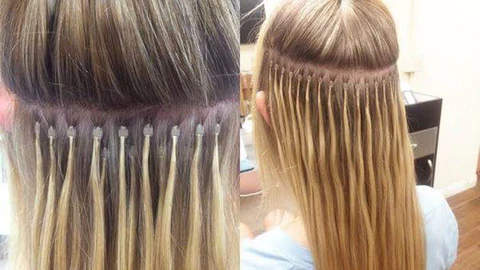
Microlink hair extensions — also called I-tip or micro-bead extensions — attach individual hair strands to your natural hair using small metal rings that are clamped in place with a specialty tool. Each strand is pre-tipped with a small cylindrical keratin bond (the “I” shape the method is named for), and the ring is crimped shut around a thin section of your natural hair to hold it in place. Because no heat or chemical adhesive is used in the clamping process itself, microlinks are often marketed as a heat-free, glue-free alternative to fusion bond extensions.
The reality is more nuanced. While microlinks avoid the chemical adhesive used in tape-in or fusion methods, they introduce a different kind of mechanical stress. The small metal ring creates a concentrated attachment point directly on a single strand or small section of your natural hair — and gravity does the rest. Over time, the consistent downward pull of the extension strand on that narrow anchor point causes micro-trauma to the hair shaft and follicle, which can lead to noticeable thinning and breakage, especially in clients with fine or already compromised hair.
Installation is also labor-intensive. Because each strand is applied individually, a full head of microlink extensions can take three to five hours, and moving them up as your natural hair grows requires removing and re-clamping each strand one at a time. For clients with active lifestyles, the micro-rings can also shift position during exercise or swimming, creating uneven tension along the scalp. Stylists frequently cite microlink maintenance as one of the most time-consuming in the industry, and for fine-haired clients in particular, the risk of damage often outweighs the aesthetic benefit the method provides. Clients who have experienced scalp sensitivity or noticeable shedding with microlinks are typically strong candidates for the Glamour Locks beaded weft system, which achieves a similar strand-by-strand aesthetic without the concentrated point tension.
Invisible Beaded Weft Hair Extensions
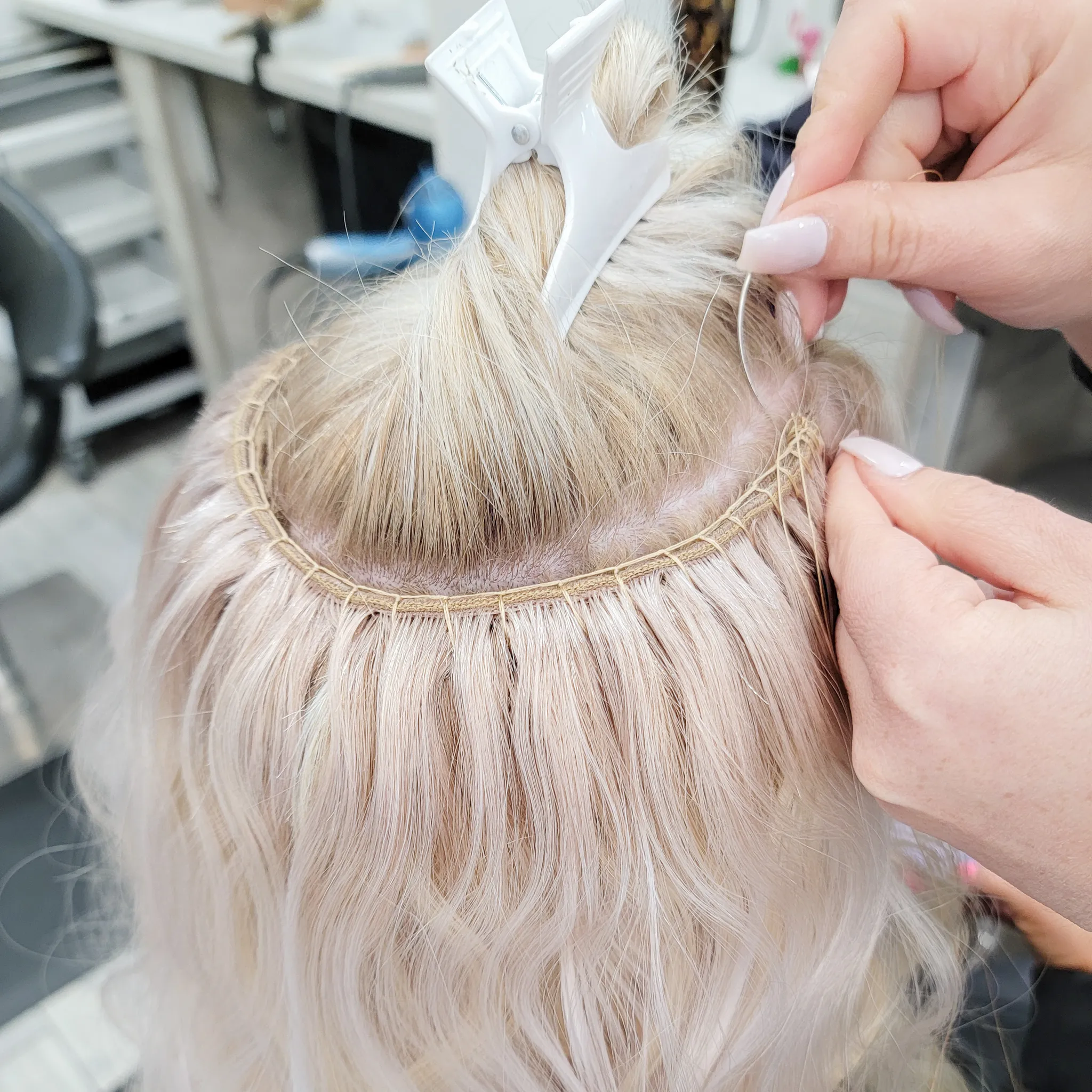
Invisible beaded weft hair extensions represent the most advanced semi-permanent extension method available today. Rather than attaching hair strand-by-strand or using adhesive, the method creates a horizontal track of micro-beads along the scalp, through which a hand-tied weft is threaded and secured. The weft is engineered with an ultra-thin, flat top edge that disappears completely into the natural hair — remaining hidden in ponytails, buns, braids, and any other style where a conventional weft would become visible. The result is extensions that look, move, and feel indistinguishable from your own hair.
The Glamour Locks Hair Extension System is built on a patented invisible beaded weft design that takes this principle further with a carbon fiber Tension Strap. This strap sits between the bead row and your natural hair, absorbing the weight of the weft so it never rests directly on your strands. No braiding, no heat, no adhesive — just a clean mechanical attachment that distributes tension evenly across the entire row rather than concentrating it at a single point. This is the only patented non-damaging extension system on the market, and it’s the reason clients who switch to Glamour Locks consistently report that their natural hair grows thicker and healthier over time rather than thinning.
Maintenance involves a retie appointment every six to eight weeks as your natural hair grows, at which point the bead track is moved up to keep the row positioned close to the scalp. The extension hair itself — when properly cared for — can last up to a full year, making invisible beaded weft one of the most cost-efficient methods over a twelve-month period. For clients who want to wear their hair any way they choose — through workouts, swimming, and daily life — without compromising the health of their natural hair, invisible beaded weft is the clear professional standard. Glamour Locks offers complimentary consultations at both our Anaheim Hills and Costa Mesa studios, where a certified stylist will evaluate your hair and walk you through exactly what the installation process involves.
Braid & Sew / Weave Hair Extensions
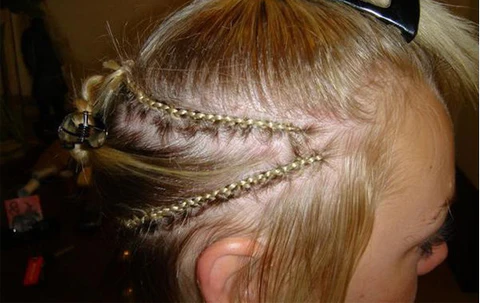
Braid and sew extensions — commonly called a sew-in weave — are one of the oldest professional extension methods in the industry. The process begins by braiding the natural hair into flat cornrows that run horizontally across the scalp, creating a base onto which wefts of extension hair are then stitched using a needle and thread. Because the wefts are sewn rather than glued or clamped, there’s no chemical adhesive involved — a distinction that leads many clients to assume the method is inherently gentler than other techniques.
The tension introduced by the braiding process itself is where the damage occurs. Cornrows must be braided tightly enough to hold the weight of the sewn wefts across weeks or months of wear — and that sustained tightness places significant mechanical stress on the hair follicles along the braid lines. Over time, this type of consistent tension is a well-documented cause of traction alopecia, a form of hair loss that begins as gradual thinning along the hairline and temples and can become permanent if the pattern is repeated across multiple installation cycles without adequate recovery time between them.
Sew-in weaves also limit access to the natural hair during wear. Because the hair is braided underneath the wefts, it can be difficult to properly cleanse and condition the scalp, leading to product buildup, dryness, and in some cases scalp irritation. Removal requires carefully cutting the threads without nicking the braided hair underneath — a process that takes considerable time and skill to do safely. For clients who want a full, voluminous result without the associated scalp stress, modern beaded weft methods achieve the same look with a fraction of the tension and without restricting access to the natural hair between appointments. Clients transitioning away from sew-ins often need a period of recovery before a new method is installed — your Glamour Locks stylist can assess your scalp health and recommend the appropriate next steps at your free consultation.
Fusion Bond Hair Extensions
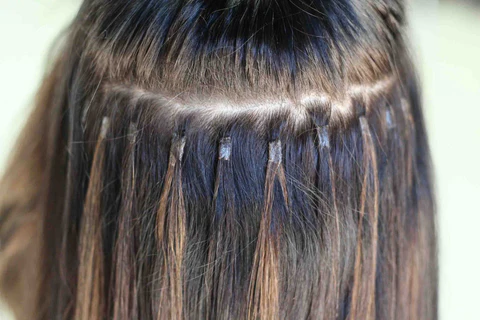
Fusion bond hair extensions — also called keratin bond or hot fusion extensions — attach individual hair strands to your natural hair using a keratin-based adhesive that is melted and re-solidified around each strand using a heated tool. The bond is formed strand-by-strand, with each extension tipped in keratin glue and fused directly to a small section of your natural hair. Because the application is so granular, skilled stylists can strategically place bonds to target specific areas of the head — a level of precision that makes fusion bonds a go-to for clients with localized thinning who want to fill in specific sections.
The core problem with fusion bonds is the application method itself. Heating keratin adhesive to 350–400°F within millimeters of the scalp and natural hair is inherently risky. Even experienced stylists can inadvertently transfer heat to the surrounding natural hair during application, causing protein damage that weakens the shaft before the extensions are even in. Once installed, each bond creates a rigid attachment point that concentrates the weight of the extension on a single, small section of natural hair. Over a full installation cycle — typically three to five months — this sustained mechanical tension causes breakage that many clients don’t notice until removal.
Removal compounds the damage. Dissolving the hardened keratin bonds requires a chemical solution that must be worked through each attachment point individually, a process that often takes as long as the original installation. The chemical exposure, combined with the mechanical friction of working the bonds loose, frequently leaves the natural hair more compromised at removal than it was at installation. For clients who have worn fusion bonds through multiple cycles, corrective treatments are often necessary before any subsequent extension method can be safely applied. The Glamour Locks team regularly works with clients who are recovering from fusion bond damage — our non-damaging system can often be installed sooner than expected, allowing your natural hair to begin recovering while you continue to enjoy beautiful extensions.
Frequently Asked Questions About Hair Extensions
How do I know which type of hair extensions is right for me?
Choosing the right type of hair extensions starts with understanding your hair’s current condition, your lifestyle, and your long-term goals. If you have fine or thin hair, you’ll want a method that doesn’t place direct tension on individual strands — which rules out tape-ins, I-tips, and keratin bonds. If you lead an active lifestyle with frequent washing, you need a secure, semi-permanent method rather than daily clip-ins. The Glamour Locks system is designed to work for nearly all hair types and lifestyles because it distributes weight evenly and doesn’t rely on adhesives or heat — making it the most versatile option available.
Do hair extensions damage your natural hair?
The honest answer is: it depends entirely on the method. Many popular extension techniques — tape-ins, fusion bonds, and micro-bead I-tips — apply concentrated tension to individual sections of your natural hair, which can lead to breakage and thinning over time. The Glamour Locks Hair Extension System is the only patented, non-damaging method on the market. Our carbon fiber Tension Strap cushions the attachment point, so the weight of your hair extensions is never resting on your natural strands. Clients who switch to our system after years of damaging methods often notice their natural hair getting thicker and healthier within months.
How long do hair extensions last?
With the Glamour Locks system, the extension hair itself can last up to a full year with proper care. You’ll visit the salon every six weeks for a retightening appointment as your natural hair grows. This is different from the hair wearing out — it’s simply the attachment point that needs to be adjusted as growth occurs. Most clients reuse the same set of wefts for multiple installs, making the cost per wear significantly lower than methods that require complete replacement every two to three months.
What is the best length to start with for first-time extension clients?
For most first-time clients, we recommend starting with a length that’s two to four inches longer than your natural hair. This creates a dramatic but believable transformation — adding enough length and volume to be noticeable while still blending naturally. Going too long too soon can create a disconnect between your natural hair and the extensions, especially if you’re starting from a shorter base. During your consultation, your Glamour Locks stylist will assess your current length, hair density, and goals to recommend the ideal starting length — typically between 16 and 20 inches for most clients.
Can I color or heat style my hair extensions?
Yes — because Glamour Locks uses 100% real human hair, you can blow-dry, curl, and straighten your hair extensions just like your natural hair. Heat styling is completely safe as long as you use a thermal protectant spray beforehand. As for color, we always recommend having color services done at a Glamour Locks salon by a certified stylist. Because extension hair doesn’t produce natural oils, it can be slightly more porous than your natural hair, which means color takes differently. Our stylists are trained colorists in addition to extension specialists, so they know exactly how to achieve consistent color results across your natural hair and extensions.
How much do hair extensions cost?
The cost of hair extensions varies based on the number of rows, the length of hair you choose, and whether you’re purchasing the extension hair outright or as part of a package. At Glamour Locks, pricing is transparent and discussed in full during your free consultation. Because our extension hair is reusable for multiple installs, the overall investment over time is lower than it might appear upfront. Many clients find that when they calculate cost per month of wear, Glamour Locks extensions are comparable to or less expensive than other salon methods that require more frequent replacement.
How soon can I wash my hair after getting extensions installed?
We recommend waiting 48 hours after installation before washing your hair extensions for the first time. This gives the attachment points time to settle and ensures a secure hold. After that initial period, you can wash your hair normally using sulfate-free shampoo — ideally every two to three days rather than daily. Overwashing can dry out extension hair faster since it doesn’t receive natural oils from your scalp. Your Glamour Locks stylist will provide you with a complete at-home care guide at your appointment so you know exactly how to maintain your new hair from day one.
What Every First-Time Client Should Know About Hair Extensions
Getting hair extensions for the first time is one of the most exciting decisions a client can make — but it’s also one of the most misunderstood. The industry is filled with options that range from genuinely excellent to actively harmful, and most clients don’t know the difference until they’ve already experienced the consequences of a poor choice. This guide walks through everything that matters before your first appointment, so you walk in informed and walk out with exactly the result you were hoping for.
Understanding the Real Cost of Hair Extensions
One of the first things clients ask about is price — and it’s a reasonable question. But cost per appointment is the wrong metric. The right way to evaluate the investment in hair extensions is total cost over 12 months, including the initial installation, all maintenance visits, any replacement hair required, and the cost of any corrective work needed if the method damages your natural hair. A cheaper method that requires new hair every three months and leaves you with breakage at the hairline costs significantly more over a year than a premium system that uses reusable wefts lasting up to 12 months and doesn’t damage the hair underneath. When clients calculate it this way, the Glamour Locks system consistently comes out ahead.
The Importance of the Consultation
A proper consultation before hair extensions isn’t optional — it’s the foundation of a successful result. At Glamour Locks, the consultation is free and covers your natural hair’s current condition, density, and length; your lifestyle and how active you are; your goals for length and volume; the number of rows that will achieve those goals; and the realistic maintenance commitment involved. No two clients are identical, which is why no two installations should be identical either. Be wary of any salon that skips the consultation or quotes you pricing without first examining your hair in person.
How to Prepare for Your First Hair Extension Appointment
Come to your appointment with clean, dry hair — no heavy products, oils, or dry shampoo. Bring photos of the length and volume you’re hoping to achieve, as well as photos of styles you want to be able to wear (ponytails, updos, braids) so your stylist can plan row placement accordingly. Wear a comfortable top that doesn’t pull over your head, since you’ll be in the salon chair for up to two hours. Plan to avoid washing your hair for 48 hours after installation to let the attachment points settle fully.
Setting Realistic Expectations
Hair extensions create a real and immediate transformation — but they’re not magic. If your natural hair is very short or very fine, the blending process takes skill and the right hair selection to look seamless. If your hair has existing damage, the underlying health of your strands matters and should be addressed as part of your overall plan. And while premium hair extensions last up to a year, they require consistent care: daily brushing, sulfate-free products, regular conditioning, and scheduled retightening every six weeks. Clients who commit to the maintenance routine get results that stay beautiful for the full wear cycle. Those who don’t will see the quality degrade faster regardless of how good the initial installation was.
Why Method Matters More Than Anything Else
The single most important decision in the entire hair extension process is choosing the right method — more than the length, more than the color, and more than the price. A method that damages your natural hair negates every other positive aspect of the experience. The Glamour Locks patented system was built around this principle: the Tension Strap absorbs the weight of the extension weft so it never rests on your natural hair. No braiding, no adhesive, no heat. The result is hair extensions that you can wear continuously for years without the breakage, thinning, or scalp damage that other methods inevitably cause over time.