
Discover the Least Damaging Hair Extensions for Healthy Locks
Not all extension methods are created equal. We rank the most popular methods from most damaging to least — so you can make the right choice for your hair and lifestyle.
Non-Damaging
Tape-In vs Sew-In
Glamour Locks #1
Not all hair extension methods are created equal. Some can seriously damage your natural hair, leading to breakage, bald spots, or long-term thinning. In this guide, we review the most popular hair extension methods and rank them from most damaging to least damaging so you can choose the best option for your hair.
#1 — Most Damaging: Tape-In Extensions
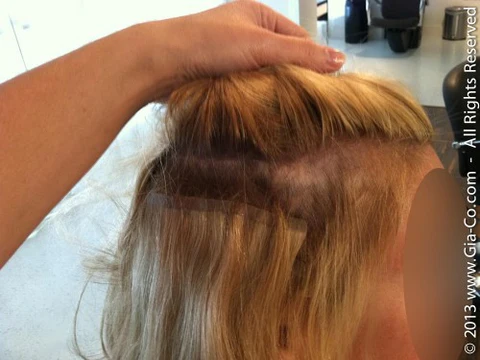
Tape-in hair extensions use small sections of extension hair with adhesive tape at the top, pressed directly onto your natural hair. While they might seem convenient, tape-ins are one of the most damaging methods available. The adhesive adds weight and strain to your roots. When you factor in brushing, styling, and everyday wear, that constant pull can lead to breakage at the root, thinning over time, and bald spots where the tapes were attached.
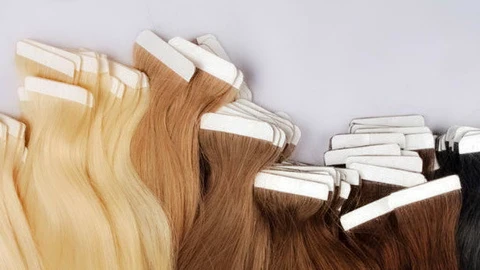
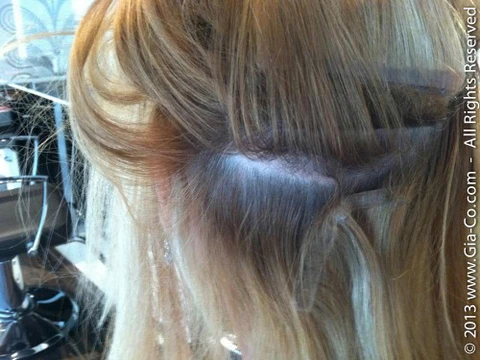
If you are adding a lot of length and volume, you may be adding over 5 ounces of extension hair — roughly the weight of a billiard ball — pulling down on your natural hair and scalp.
#2 — Highly Damaging: Micro-Link / I-Tip Extensions
Micro-link extensions go by many names — i-tip, micro ring, micro bead, i-link, loop, and cold fusion extensions. Regardless of the name, the method is the same: each strand of extension hair has a small metal bead clamped shut onto a small section of your natural hair.
Many salons claim micro-links don’t cause damage when applied correctly. The reality is that they create a great deal of tension on very small sections of hair. Because your natural hair sheds 80–100 strands per day, fewer and fewer hairs end up holding each bead over time. By the time you come in for removal, the bead may be hanging on by just a few fragile hairs — increasing the risk of those hairs being ripped from the scalp.
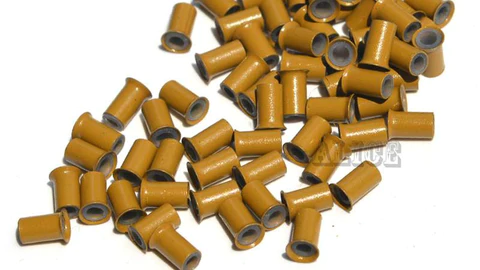
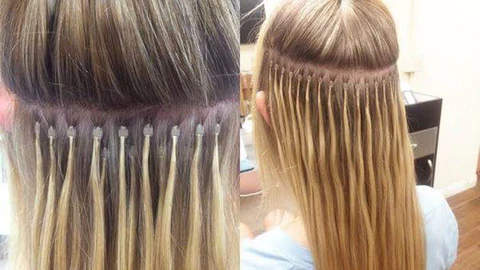
Other common issues include falling out when conditioner or oils are used near the beads, severe knotting and matting, application times up to 5 hours, costs up to $2,500, and discomfort sleeping on the beads.
#3 — Damaging: Keratin Bond Extensions
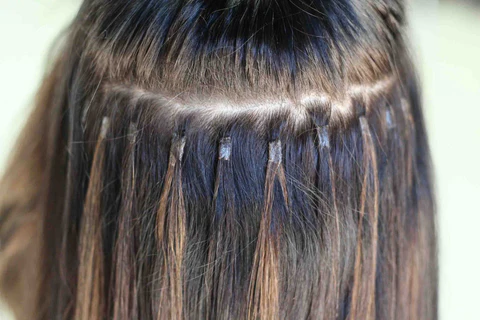
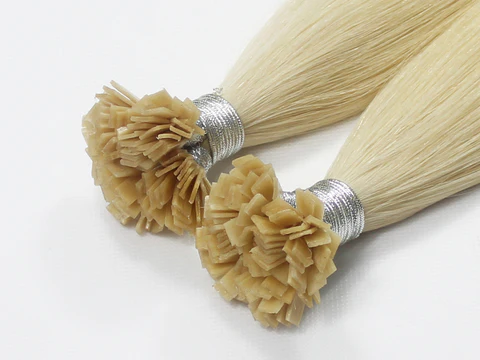
Keratin bond extensions use a keratin-based glue melted with a heated tool and fused directly to your natural hair. Because the bond is attached directly to small sections of your hair, the weight of each extension pulls at the root day after day — meaning breakage and damage are almost guaranteed over time. Like other individual methods, keratin bonds are also more prone to matting and tangling, making removal long, tedious, and often damaging.
#4 — Damaging: Braid and Sew Extensions
Braid and sew is one of the oldest and most traditional methods. Your stylist creates tight braids across the back of your head, then sews the weft into the braid. The braid itself places tension on your natural hair — and once the weft is attached, that tension increases even more. Over time this can cause severe bald spots along the braids. This method should not be confused with modern, low-tension weft methods like the Glamour Locks System.
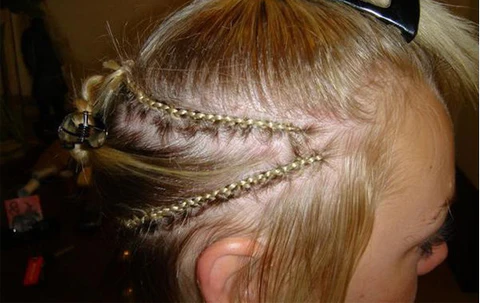
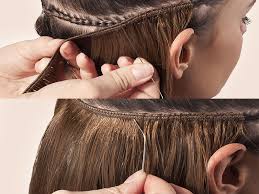
#5 — Safer: Beaded / Sew-In Weft Extensions
Beaded weft systems (also called sew-in or invisible weft extensions) are a newer, safer category. Your stylist creates a clean row parting across the back of your scalp, then sews a hair weft — a bundle of hair sewn together horizontally at the top — onto the row using small beads and thread.
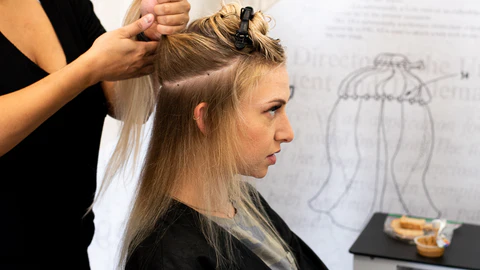
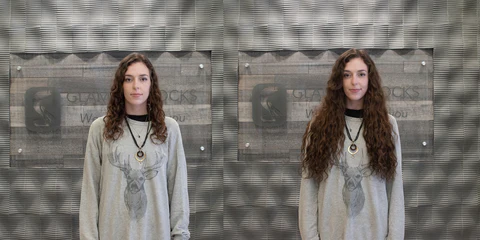
Beaded weft systems are less damaging than individual methods, but the amount of strain on your hair still depends on how the weight of the weft is supported.
#6 — Least Damaging: The Glamour Locks System
The Glamour Locks Hair Extension System is the only patented and guaranteed non-damaging hair extension method available today. It was designed to keep all the benefits of extensions — length, fullness, volume — while removing every damage-causing element like direct tension, glue, and heat.
The key is a patented tool called the Tension Strap — a barrier between your natural hair and the weight of the extension hair. The Tension Strap bears the weight of the extension hair, not your natural hair.
Minimal stress on your scalp
No pulling on fragile strands
Comfortable, long-term wear
Truly guaranteed non-damaging

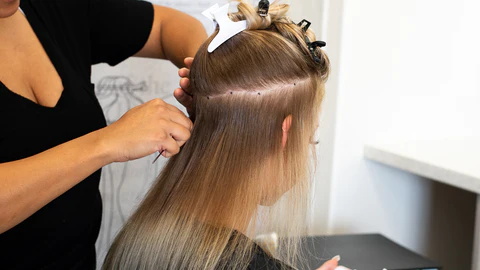
What Makes Hair Extensions Non-Damaging?
Non-damaging hair extensions are those that do not place direct stress on your natural hair. Any method that anchors extension hair directly to small sections of your own hair — using glue, beads, or tight braids — can lead to breakage at the root, bald spots and thinning, and long-term damage that can take years to repair.
Methods that distribute the weight across a support structure — like the Glamour Locks Tension Strap — offer the least damaging option available. For those who need volume or length on the top of the head, learn more about our Crown Fusion Hair Extensions.
Frequently Asked Questions: Least Damaging Hair Extensions
What makes some hair extension methods more damaging than others?
The core mechanism of damage in most extension methods is tension — specifically, the weight or mechanical stress placed on your natural hair at the attachment point. Methods that attach extension hair directly to small sections of your natural strands concentrate significant weight on a limited number of hairs. Over weeks and months of continuous wear, this stress weakens the hair shaft and follicle, resulting in breakage and thinning. The least damaging hair extensions are those that decouple the weight of the extension from your natural hair entirely — which is exactly what the Glamour Locks Tension Strap achieves.
Why isn’t there a universally agreed-upon ranking of extension methods by damage level?
Because installation quality varies significantly between stylists and salons, the same method can produce dramatically different outcomes. However, some principles hold regardless of installation quality: methods using adhesive create removal-related damage; methods attaching to individual strands create concentrated tension; methods using heat create structural stress. The Glamour Locks system avoids all three of these damage mechanisms by design — which is why it can genuinely be described as the least damaging hair extensions available, not just in theory but in practice across thousands of clients.
Can the least damaging hair extensions still cause problems if not maintained properly?
Yes — even the safest installation method can cause issues if maintenance is neglected. Extensions that grow too far from the scalp without retightening create leverage that stresses the attachment point. Tangling at the track that isn’t addressed promptly can put tension on the natural hair that wasn’t there at installation. The Glamour Locks system removes the risk that comes from the method itself, but the at-home maintenance routine your stylist provides is essential for ensuring the install remains as safe at week six as it was on day one.
Are clip-in extensions the least damaging because they’re temporary?
Clip-in extensions cause no permanent damage when used occasionally. However, clients who use clip-ins daily often develop tension at the clip attachment points, particularly along the hairline and crown. Daily wear combined with the repetitive clipping and unclipping motion creates micro-stress that accumulates over time. For clients who want to wear extensions every day, a properly installed semi-permanent method like Glamour Locks is actually less stressful on natural hair than daily clip-in use — because the load is continuously distributed by the Tension Strap rather than concentrated at clip points multiple times per day.
How do I transition from a damaging extension method to a less damaging one?
The first step is removing the damaging method completely and assessing the current state of your natural hair before proceeding. Your Glamour Locks stylist will examine your hair for breakage patterns, thinning at the attachment points, and overall density before recommending a timeline. In most cases, transitioning directly to the Glamour Locks system is possible even with some existing damage — because the non-damaging nature of the installation means it doesn’t compound whatever has already occurred. For clients with significant traction damage, a short recovery period may be recommended, but for most, the transition to the least damaging hair extensions available is immediate.
Making the Switch to the Least Damaging Hair Extensions
For clients who have experienced damage from other extension methods and are considering making a change, the transition process raises practical questions: How do you evaluate a new salon? What should you expect in the first appointment? And how do you know if the new method is actually less damaging than what you were doing before? These are the questions this section addresses directly.
How to Evaluate a Salon Claiming to Offer Non-Damaging Extensions
The phrase “non-damaging” appears in the marketing of many extension salons — but most don’t define what they mean by it or explain the mechanism by which damage is prevented. When evaluating any salon making this claim, ask specifically: What does the installation method do differently to prevent the tension that causes traction damage? Is the method patented or proprietary? Can they show you before-and-after results of clients who have worn the extensions for more than six months? A salon offering genuinely the least damaging hair extensions will be able to answer all of these questions clearly and specifically, because the non-damaging quality is a function of how the system is engineered, not a general aspiration.
The First Three Months on a New Method
After transitioning from a damaging method to the Glamour Locks system, the first three months are a stabilization and assessment period. Your natural hair is no longer being stressed by the previous method, and the new installation isn’t adding any new stress. The existing damage doesn’t disappear immediately — hair that has been broken or thinned takes time to grow back — but it stops progressing. By month three, most clients can see clearly that the rate of breakage has slowed significantly compared to what they experienced with their previous method. This is the first measurable evidence that the switch to the least damaging hair extensions is working.
Building Confidence in the New System
Clients who have been damaged by previous extension methods often come to the Glamour Locks consultation with significant anxiety about trying again. This is completely understandable. The best way to build confidence in a new system is to ask for transparency at every stage: understand exactly what’s being done during installation, ask your stylist to explain the function of each component (the bead, the weft, the Tension Strap), and check in at your first retightening to assess whether your natural hair looks the same or better than it did at installation. At Glamour Locks, we encourage this level of engagement because it leads to better client outcomes and a more satisfying experience — clients who understand their extensions take better care of them and catch problems earlier when they do arise.