
Are Weft Extensions Bad for Your Hair? The Truth About Glamour Locks’ Non-Damaging System
The answer depends entirely on the method used. Traditional weft extensions can cause damage — but when installed with the patented Glamour Locks system, they’re completely safe and can actually help protect your hair over time.
Non-Damaging
Cuticle Hair Wefts
Orange County
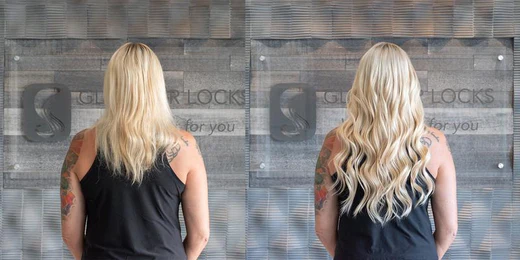
If you’ve been researching extensions, you’ve probably asked yourself: are weft extensions bad for your hair? The answer depends entirely on the method used and the quality of the installation. Traditional weft extensions, when applied incorrectly or with too much tension, can pull on your natural hair and cause breakage. But when installed properly using a patented non-damaging system like Glamour Locks Weft Hair Extensions, they are completely safe — and can actually help protect and strengthen your hair over time.
Why Some Weft Extensions Cause Damage
Not all weft extensions are created equal. Many salon methods still rely on tight braiding, harsh adhesives, or heavy beads that cause tension at the root. Over time, this leads to scalp soreness, hair thinning, and even traction alopecia.
Common Causes of Damage
At Glamour Locks, every one of these problems has been solved with our patented Tension Strap System, which evenly distributes weight to eliminate pulling and prevent damage.
Overly tight braids used to anchor the wefts cause tension and stress at the root.
Harsh adhesives break down natural hair cuticles and are difficult to remove without further damage.
Strain on fine or fragile hair from incorrect positioning leads to long-term thinning.
Silicone-coated wefts quickly dry out, tangle, and strip moisture from your natural strands.
Why Glamour Locks Weft Extensions Are Safe
The Glamour Locks Hair Extension System is the only patented, guaranteed non-damaging weft method available today. It uses no glue, no heat, and no braiding — only soft, flexible materials designed to move naturally with your hair.
What Makes Glamour Locks Different
This ultra-thin support strap holds the weight of the extensions, keeping your natural hair completely protected.
100% human, ethically sourced European wefts maintain shine, strength, and softness for up to 12 months.
Invisible even in a ponytail or bun, and lightweight from day one.
Tightening appointments take just 1–2 hours — far faster than most other methods.
With Glamour Locks, your hair stays healthy and strong — no breakage, no thinning, and no tension.
The Importance of Quality Hair Wefts
When it comes to answering “are weft extensions bad for your hair,” the quality of the hair itself matters just as much as the installation. Glamour Locks exclusively uses Cuticle Hair Wefts, made from single-donor, European-sourced human hair.
Because the cuticle remains intact, the hair won’t tangle, frizz, or lose luster like cheaper, chemically treated alternatives.
The hair’s natural cuticle is maintained for long-term shine and durability.
Ensuring transparency and consistent quality from a single donor source.
With proper care, Cuticle Hair Wefts last 9–12 months or more.
Why Glamour Locks Is the #1 Choice for Weft Hair Extensions
For over 10 years, Glamour Locks has been the leading destination for women seeking natural-looking, long-lasting extensions without damage. Every stylist completes a comprehensive Glamour Locks Apprenticeship Program before performing full installations, guaranteeing precision and safety every time.
Our salons in Costa Mesa and Anaheim Hills continue to set the standard for invisible, comfortable, and reusable weft extensions that actually protect your natural hair.
Final Thoughts: Are Weft Extensions Bad for Your Hair?
When installed with the wrong method, yes — weft extensions can cause damage. But when done right, with the Glamour Locks Hair Extension System, they’re completely safe, comfortable, and reusable. Our patented technique makes weft extensions not just non-damaging, but actually beneficial for your hair’s health and growth. You’ll enjoy seamless length, incredible volume, and lasting confidence — all without sacrificing your natural hair.
Visit one of our modern studios in Costa Mesa or Anaheim Hills to begin your transformation. Learn more about our patented method and Cuticle Hair Wefts at GlamourLocks.com.
Frequently Asked Questions: Are Weft Extensions Bad for Your Hair?
Are weft extensions bad for your hair if you have fine or thin strands?
Fine hair requires extra care when it comes to extensions, and the wrong method can absolutely cause damage. Traditional weft extensions that rely on tight braiding, heavy clips, or adhesive create concentrated pressure on delicate strands. But the Glamour Locks system was specifically engineered with fine hair in mind. The patented Tension Strap distributes the weight of the weft across the row rather than pulling on individual strands, making it safe even for naturally thin or fragile hair. Many of our clients with fine hair actually see their natural hair improve in density after switching to our method because it protects rather than stresses their strands.
Can weft extensions cause traction alopecia?
Traction alopecia — hair loss caused by repeated tension on the follicle — is a real risk with many extension methods, particularly tight braided sew-ins, clip-ins worn daily, and micro-bead systems. Are weft extensions bad for your hair in this regard? Not when they’re installed using the Glamour Locks method. Our system uses a cushioned Tension Strap that sits comfortably between the scalp and the weft, eliminating the direct tension that causes traction alopecia. Clients with a history of hair loss due to other extension methods have successfully worn Glamour Locks extensions without further damage.
How do weft extensions differ from strand-by-strand methods?
Weft extensions use a continuous row of hair sewn onto a thin track, while strand-by-strand methods attach individual small bundles to single sections of your natural hair. The critical difference is weight distribution. Strand-by-strand methods concentrate tension on a small number of natural hairs, which increases the risk of breakage at those attachment points. Weft extensions spread the load across a wider area. When the weft is installed using the Glamour Locks patented beaded track system rather than braided or glued, the weight is distributed so evenly that there’s effectively no stress on your natural hair at all.
How long do weft extensions last before needing maintenance?
With the Glamour Locks system, clients come in every six weeks for a retightening appointment as their natural hair grows. The extension hair itself typically lasts 9 to 12 months. Lower-quality weft extensions, especially those using silicone-coated hair, often begin to tangle and shed after just a few weeks because the coating wears off and the mismatched cuticles rub together. Investing in quality wefts upfront saves significantly on replacement costs over a 12-month period.
What should I look for in a salon that installs weft extensions?
Not all salons offering weft extensions use the same technique, and the quality of installation makes an enormous difference in your results. Look for a salon where stylists are certified specifically in the weft method they use — not just generally licensed cosmetologists. Ask whether the method is patented, whether the hair is single-donor and cuticle-aligned, and whether the salon has before-and-after photos of real clients they can show you. At Glamour Locks, every stylist completes extensive training in our patented system before working with clients, and we use only cuticle-aligned European human hair sourced from a single donor for each weft.
The Complete Guide to Weft Extensions and Hair Health
The question of whether weft extensions are bad for your hair is really a question about method, materials, and maintenance — not about weft extensions as a category. Understanding each of these factors gives you the knowledge to make a genuinely informed decision rather than relying on marketing claims or secondhand opinions from people who had a bad experience with a completely different technique.
Why the Weft Construction Matters
Not all wefts are built the same way. Machine-made wefts have a thick, stiff header along the top edge where the hair is woven. This header creates a raised ridge when installed, which makes it harder to conceal — particularly on fine or straight hair — and adds unnecessary bulk near the scalp. Hand-tied wefts are constructed differently: the hair is knotted in small sections along a thin thread, producing a weft that is thinner, lighter, and lies completely flat. The flatness is what allows hand-tied wefts to sit invisibly against the scalp. Are weft extensions bad for your hair when they’re hand-tied and properly installed? No — the construction actually reduces the risk of visible attachment points and distributes weight more evenly than machine alternatives.
The Role of Hair Quality in Long-Term Wear
Even a perfectly installed weft using the best method can cause problems if the hair itself is poor quality. Low-grade extension hair — typically collected from multiple donors, stripped of its cuticle, and coated with silicone — begins to tangle and mat as the silicone washes off. When tangled extension hair is brushed aggressively near the attachment point, it creates tension on the natural hair that the installation itself never intended. This is one of the hidden ways that cheap extensions cause damage even when the installation method is technically sound. Single-donor, cuticle-aligned hair like the wefts used at Glamour Locks doesn’t tangle this way because all the cuticle scales face the same direction, allowing the hair to move freely and brush out smoothly for the full wear cycle.
How Retightening Affects Hair Health
Every weft extension method requires periodic maintenance as natural hair grows. How this maintenance is performed has a significant impact on whether weft extensions are bad for your hair over time. If the track is allowed to grow too far from the scalp — beyond the recommended six-week interval — the extended leverage creates a pulling effect that can stress the attachment point and the natural hair surrounding it. If the track is repositioned too aggressively or too frequently without adequate rest periods, the same area of scalp is repeatedly stressed. At Glamour Locks, the six-week retightening schedule is calibrated specifically to avoid both of these scenarios: frequent enough to prevent excess leverage, with enough rest between visits for the scalp to remain healthy.
Common Signs That Your Weft Extensions Are Installed Incorrectly
Knowing the warning signs of a poor installation helps you address problems before they become permanent damage. Persistent headaches or scalp soreness beyond the first 48 hours after installation suggest the track is too tight. Visible bumps or ridges in the hair when worn down indicate the weft is sitting too high or the weft header is too thick for your hair density. Breakage along a specific horizontal line in your hair suggests the weft weight is concentrated at that point rather than distributed. And extensions that slip or slide within the first few weeks indicate that the beads were not secured properly during installation. None of these issues should occur with a properly executed Glamour Locks installation — but if you experience any of them after any extension appointment, contact your stylist before your next scheduled visit.
The Long-Term Picture: Are Weft Extensions Bad for Your Hair After Years of Wear?
This is the most important question, and the honest answer depends entirely on which system you use. Clients who have worn the Glamour Locks system continuously for three, four, and five years consistently show natural hair that is healthier at the end of that period than when they started. Their hairlines are intact, their density has not decreased, and their scalp shows no signs of traction damage. The same cannot be said for clients who wear traditional weft methods involving braiding, or strand-by-strand methods involving adhesive, for the same duration. The method is the variable — and the Glamour Locks Tension Strap system is the only method designed from the ground up to produce a healthy long-term outcome.